


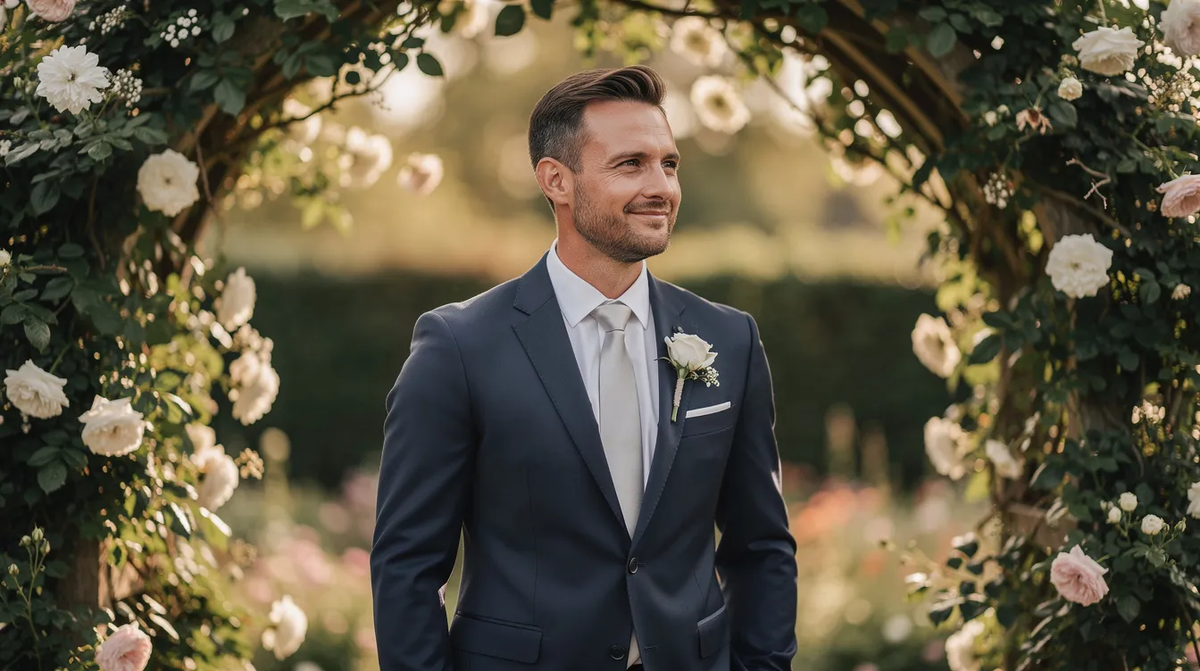
Which wedding suit style should a 2027 groom choose? The short answer is that most grooms will be happiest with a made to measure suit. It delivers an excellent fit, lets you pick your own fabric and details, and lands in a price range and timeline that works for real life. Bespoke is ideal if you want a once-in-a-lifetime heirloom piece with total design freedom and you have the budget and lead time to support it.
Here's the quick breakdown:
|
|
Bespoke |
Made to Measure |
Off the Rack |
|---|---|---|---|
|
Pattern |
Unique paper pattern drafted from scratch |
Existing pattern adjusted to your body |
Standard sizing, no custom pattern |
|
Fittings |
3 to 5 fittings over several weeks |
1 to 2 fittings |
1 alterations visit |
|
Timeline |
8 to 12+ weeks of production |
4 to 6 weeks of production |
Same day to 2 weeks |
|
Price range |
Starts around $3,500 to $6,500+ |
Roughly $800 to $2,500 |
Varies widely |
If you love finishing details and have 6+ months leeway, go bespoke. If you want a great fit in 2 to 3 months, made to measure is your move. And if the wedding is weeks away, a well-altered off the rack suit can still look sharp.
The rest of this article walks through fit, budget, timeline, and wedding party coordination so you can feel confident in your decision.

What Makes a Groom's Suit Different From the Rest of the Wedding Party?
The groom's suit should be the most distinguished garment among the groomsmen, fathers, and other suit-wearers, even when everyone is in the same color family. The groom's attire doesn't need to scream "look at me." It just needs to carry a few intentional upgrades that create a natural focal point in ceremony moments and photos.
The groom's suit should stand out with unique details. That could mean a richer cloth, a slightly deeper shade, a waistcoat, or a different lapel style. For example, a 2027 groom might wear a deep navy made to measure suit while the groomsmen wear a lighter navy. Or the groom could step into a bespoke black tie tuxedo while the groomsmen wear classic black suits.
Brides and partners often coordinate bouquet colors, boutonnières, or tie shades so the groom's look connects to the overall wedding theme and decor. The idea is visual hierarchy, not competition. When done well, the groom stands out without overpowering the people standing beside him.
Bespoke Suits for Grooms: Full Control and Maximum Craft
Bespoke tailoring starts with the tailor creating a unique paper pattern for each client, drafted to the groom's exact measurements, posture, and shoulder slope. Construction of bespoke suits mostly involves hand cutting and hand stitching by master tailors, and the bespoke process often requires 3 to 5 fittings over several weeks or months. The tailor takes more than 50 measurements for a perfect fit, accounting for asymmetries most people don't even notice in themselves, and that level of individualized patternmaking, detailed measurement, and repeated adjustment delivers a fit no other method can truly match.
Bespoke suits offer near-limitless personalization in design elements. A 2027 groom can choose:
-
Fabric mill and weight (fine wool, wool-linen blends, high-twist options)
-
Lapel style (notch, peak, or shawl) and width
-
Pocket shape (flap, patch, jetted)
-
Vent configuration (single, double, or none)
-
Lining color and design
-
Horn buttons, monograms, and other personal touches
The typical bespoke suit journey looks like this: an initial consultation where you discuss style and review fabrics; a first fitting in baste form (the suit loosely assembled so the tailor can see how cloth drapes on your body); a second fitting with the structure in place; and a final fitting to fine-tune sleeve length, trouser break, and any remaining final adjustments.
Bespoke suits require 8 to 12 weeks for completion, though first time orders at some houses stretch to 14 weeks. This is a bigger investment meant to last for years of formal events beyond the wedding. The groom who benefits most from a bespoke garment is someone with a unique body shape, strong personal style preferences, or a vision of a once-in-a-lifetime black tie or formal suit.
Made to Measure Suits: The Sweet Spot for Most 2027 Grooms
Made to measure is a tailoring process where the groom starts with an existing pattern (called a "block") that is then adjusted to his measurements. Made to measure uses pre-prepared patterns adjusted to the client's measurements, which makes it a more efficient process than bespoke while still producing a garment that fits specific body measurements.
Made to measure suits allow for personalized style choices: you'll pick your fabric, lapel style, lining, buttons, and other details from a curated menu. They are limited by the available options in the manufacturer's template, so you won't have the same structural freedom as bespoke, but the customization still lifts you well above anything off the rack.
Here's what the experience looks like, step by step:
-
A stylist or tailor takes your measurements and has you try on a sample jacket to read posture and proportions.
-
You choose fabric selection, lining, button style, and design details from available options.
-
The suit goes into production. Made to measure suits typically take 4 to 6 weeks to produce.
-
You return for a first fitting, and the tailor makes any needed tweaks.
-
The groom receives the finished suit, ready for the wedding day.
For a realistic 2027 timeline, order your made to measure wedding suits 8 to 12 weeks in advance to allow for production, at least one fitting, and a pickup fitting. Made to measure suits typically require 8 to 12 weeks for the full tailoring cycle when you include scheduling and adjustments.
This is why made to measure is so popular for wedding parties. It's a practical service for outfitting groomsmen and fathers in coordinated looks with less hassle than going bespoke for everyone.
Off the Rack, Rental, or Custom: Understanding All Your Options
Three main categories cover roughly what every groom will encounter:
-
Off the rack: Immediate availability, helpful for last-minute 2027 weddings or elopements. You'll almost certainly need alterations to shoulders, sleeves, and trousers. The fit depends on how close your body is to the manufacturer's standard sizing.
-
Rental options: Lower upfront cost and convenience, but generic fits, worn fabrics, and a look that may not reflect the groom's personal preferences. Rental suits rarely feel special in photos, and the clothing quality tends to fall short of what you'd want for the day.
-
Custom suit (bespoke or made to measure): A long-term investment. Made to measure suits use higher quality fabrics than rentals, and a bespoke suit takes that up another level. Either option gives you something you'll actually want to wear again.
Blending options across the wedding party is a practical move. The groom could wear a made to measure or bespoke suit while groomsmen wear carefully altered off the rack suits that match in color and formality. Nobody in the photos will know the difference, and the groom still gets the fit and fabric he wanted.
Fit and Comfort: How Each Route Actually Feels on Your Wedding Day
Fit is the single biggest reason a groom's suit looks expensive and helps him feel comfortable through 10 to 12 hours of photos, ceremony, dinner, and dancing. A suit that fits well doesn't just look better, it moves better.
Here's what a great fit looks like:
-
Shoulders lay flat without extending past the natural shoulder line
-
The jacket closes without pulling across the chest
-
Trousers move easily when the groom sits, walks, or dances
-
Sleeves show a hint of shirt cuff (about half an inch)
Bespoke offers the most precise, posture-aware shaping because the tailor observes how cloth sits on a live body across several fittings. Made to measure suits get very close with fewer fittings; the fit will satisfy most grooms. Off the rack depends heavily on post-purchase alterations and how standard your body proportions are.
At your first fitting, test movement. Raise your arms, sit down, take a few steps, and try a little dance move. If the jacket rides up or the trousers pull, the tailor needs to know before final adjustments happen.
In 2027, trends lean toward slightly more relaxed, natural fits over ultra-skinny cuts. That's good news for comfort, especially in warm venues and long receptions.
Fabric, Color, and Dress Code: Matching Your Suit to Your 2027 Wedding
Venue, season, and dress code should guide fabric and color choices more than any social media trend. Choosing fabric should consider venue climate and formality first, personal preference second.
Fabric basics for 2027 grooms:
-
Lightweight wool suits are ideal for summer weddings; wool-linen blends add texture and breathability for outdoor ceremonies.
-
Mid-weight wool (around 260-300g) handles most indoor and spring/fall settings well.
-
Fabric weight affects comfort in different wedding seasons; a heavy flannel in July will be miserable, and a tropical-weight wool in December will look limp.
-
Textured fabrics photograph better than flat weaves because they catch light and add visual depth to images.
Color guidance:
-
Navy and charcoal are timeless colors for formal weddings and the most versatile choices for re-wear.
-
Lighter greys, stone, or soft blue work for beach or garden ceremonies.
-
Classic black is reserved for evening black tie events.
-
Charcoal grey remains one of the most underrated options: it pairs with nearly any wedding color palette.
A made to measure tuxedo or bespoke tuxedo is worth the investment for formal ballrooms, black tie invitations, or when the couple wants an elevated, Old Hollywood mood. If the dress code doesn't call for a tux, a well-cut dark suit in the right fabric will carry the same confidence.
Bring inspiration photos and venue images to the first fitting so fabric choices align with decor, florals, and the bride's outfit.

Timeline: When to Start on Your 2027 Groom's Suit
Here's a clear ordering timeline for 2027:
|
Milestone |
Bespoke |
Made to Measure |
|---|---|---|
|
Start conversations |
6 to 9 months before |
3 to 5 months before |
|
Initial consultation + fabric decisions |
Month 1 |
Month 1 |
|
First fitting |
Week 6-8 |
Week 4-6 |
|
Second fitting (if needed) |
Week 10-12 |
Week 6-8 (pickup) |
|
Final tweaks buffer |
2-3 weeks before wedding |
2 weeks before wedding |
For a 2027 wedding, starting bespoke consultations 6 to 9 months prior is advisable, as it leaves time for fabric sourcing and multiple fittings without rushing before the wedding. For made to measure suits, planning 3 to 5 months ahead is recommended to account for production, fittings, and any surprises.
Cutting it too close limits fabric options and can force the groom into off the rack or rental options that don't match the wedding vision. If you're coordinating with a wedding party, align suit fittings with bridal gown appointments or group visits when possible so everyone stays on the same schedule.
Even if your date is sooner than ideal, it's still worth walking into a consultation. A good tailor will tell you honestly what level of customization is possible with the time remaining. You might be surprised; some tailors keep popular fabrics in stock and can compress the process if you start early in the conversation.
Coordinating the Wedding Party: Groomsmen, Fathers, and More
A cohesive wedding party look doesn't mean identical suits. Groomsmen suits should be complementary and cohesive, not carbon copies of the groom's clothing. The groom can wear a different fabric shade than groomsmen; say, a deeper navy while the groomsmen wear a medium navy, or a richer wool while groomsmen are in a lighter blend.
Specific strategies that work in 2027:
-
Same suit color, but the groom adds a waistcoat or a different tie and pocket square
-
Groom in a three-piece made to measure suit; groomsmen in two-piece versions of a similar fabric
-
Different boutonniere styles can enhance visual harmony: the groom's boutonniere could feature a bloom that echoes the bride's bouquet, while groomsmen wear a simpler, smaller version
Fathers' suits should complement the groomsmen without copying them. A slightly deeper charcoal, or the same suit family with a different tie palette, honors their role without overshadowing the couple.
Groomsmen may wear made to measure suits for better fit, and when budgets allow, the consistency in fit makes group photos cleaner than a mix of rental options and off the rack guesses. If budgets vary, standardize the smaller details (matching ties, shirt color, shoe style) and let each person source the suit itself at their comfort level.
Budgeting for Bespoke vs. Made to Measure in 2027
The groom's suit is a line item worth planning early. Here's a high level view of cost tiers:
|
Option |
Typical Range |
Best For |
|---|---|---|
|
Rental |
$150-$400 |
Tight budgets, last-minute needs |
|
Off the rack + alterations |
$400-$1,200 |
Moderate budgets, standard sizing |
|
Made to measure |
$800-$2,500 |
Strong fit and customization at reasonable cost |
|
Bespoke |
$3,500-$6,500+ |
Maximum craft, unique body shapes, heirloom quality |
The cost of made to measure suits typically ranges from $800 to $2,500, depending on fabric and style. The cost of bespoke suits generally starts at around $3,500 to $6,500 and can vary by tailor.
Think about cost-per-wear. Made to measure suits can be worn for multiple occasions covering future weddings, anniversaries, work events, and charity galas. A $2,000 made to measure suit worn 20 times over the next decade works out to $100 per wear. A $300 rental worn once is $300 per wear. The math favors investing in something you'll actually keep.
Identify what matters most to you whether its fit, fabric quality, or customization depth. If you know you want to spend more on a bespoke suit, consider saving in other areas like extra accessories or groomsmen gifts to balance the overall wedding budget.

How to Prepare for Your First Fitting
Walk into your first fitting with:
-
Your wedding date and venue details
-
Your preferred dress code (semi-formal, formal, black tie)
-
At least a few reference photos of suits or styles you like
-
A general idea of your budget range
Wear or bring shoes similar to what you'll wear on the wedding day, along with a dress shirt, so the tailor can read posture and set trouser length accurately.
The first fitting is as much a style conversation as a measuring session. Expect questions about personal style, comfort preferences, and how you want to feel in your wedding suit. A good tailor will translate "I want to look sharp but relaxed" into concrete decisions about fabric selection, lapel width, and jacket length. You don't need to know the difference between half-canvas and full-canvas construction since that's the tailor's job.
Notes from the first fitting will guide fabric swatches, lining options, and decisions about whether bespoke or made to measure suits make more sense for your timeline and budget. If you've already been exploring style trends, whether for first-time event outfit ideas or broader seasonal fashion, bring that inspiration along. It helps the tailor understand your taste faster.
Bringing It All Together for Your 2027 Wedding
The decision comes down to three paths: bespoke for maximum control and storytelling, made to measure as the most practical balance of fit and value, and off the rack or rentals for tight timelines or smaller budgets. Many grooms land on made to measure because it delivers an excellent fit without the extended timeline or higher price tag of bespoke.
Your groom's suit should align with the bride's outfit, the venue, and the wedding party styling, not just follow whatever appeared on a style influencer's feed last week. Think beyond the wedding day: will this suit work for anniversaries, formal work events, or future black tie invitations in 2028 and beyond? A classic navy or charcoal suit in quality wool will serve you for years.
Once the suit path is chosen, you and your partner can turn to other style details. Accessories, color palettes, and finishing touches all play a role in pulling the full look together. If you're looking for inspiration on how seasonal trends shape outfit choices or how to find stylish options on a budget, Alexandra's Boutique covers those conversations across our blog.
And if you're coordinating the full picture, from the bride's dress to the groom's suit to the wedding party's look, Alexandra's Boutique can help make sure everything feels cohesive, comfortable, and effortlessly stylish in every 2027 photo.


