


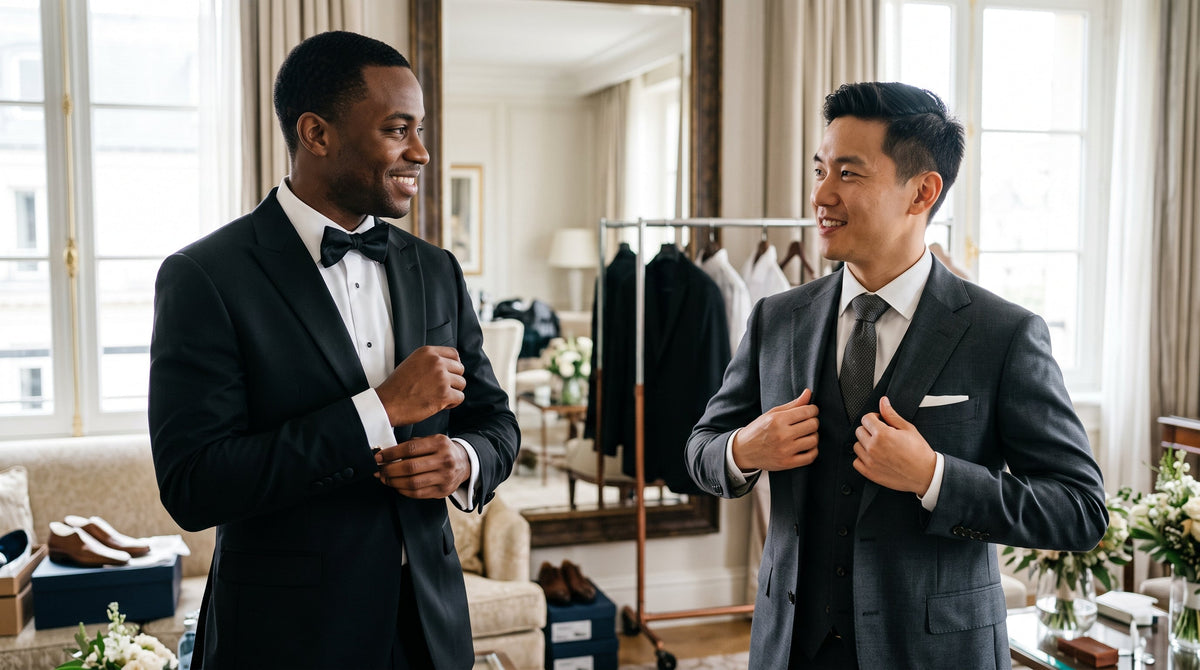
If you're wondering a what to buy in tuxedo vs suit comparison, the short answer is this: choose a tuxedo for a black-tie or formal evening wedding, especially in a ballroom or with a very formal bridal look, and choose a suit for a semi-formal, daytime, outdoor, or more relaxed wedding where versatility and rewear matter more. Your wedding outfit deserves the same attention as the dress because it sets the formality of the day, affects your comfort, and shows up in every photo.
The tuxedo vs suit decision isn't just about looks. For grooms trying to match their wedding style, dress code, venue, budget, and personal taste, it also determines how coordinated the wedding party feels and whether the outfit earns another wear after the last dance. Just like brides research gowns and scope out clearance finds before committing, grooms should understand their options before swiping a credit card.
This guide breaks down the real differences between tuxedos and suits, when each one makes sense, how to coordinate accessories and groomsmen, what each option costs, what works best by season and venue, when to shop, and how to make subtle style upgrades without overcomplicating the look.

Tuxedo vs Suit: The Key Differences Every Groom Should Know
Before you set foot in a shop, here's the crash course on a tuxedo and a suit. These are the details that separate the two, and knowing them keeps you from second guessing yourself at the fitting.
A tuxedo features satin accents for a formal appearance. Tuxedos include satin details on lapels and buttons, and they have a satin stripe (or grosgrain strip) running down the outer seam of the trousers. Tuxedos feature satin or grosgrain facing on the lapels and satin covered buttons, giving the entire garment a polished sheen that signals black tie evening wear. Tuxedos are traditionally worn with a bow tie, and the lapels are almost always peak or shawl collar rather than the standard notch you see on most suits.
A suit consists of a matching jacket and trousers cut from the same fabric, with matte buttons and no satin anywhere. Suits offer versatility because the styling is flexible: swap the tie, change the shirt, switch the shoes, and the same suit works at a wedding, an interview, or a holiday dinner.
Tuxedos and suits at a glance:
|
Feature |
Tuxedo |
Suit |
|---|---|---|
|
Lapels |
Satin-faced peak or shawl collar |
Notch, peak, or shawl in matching fabric |
|
Buttons |
Satin covered buttons |
Horn, plastic, or fabric-matched |
|
Trouser detail |
Satin stripe down the leg |
No stripe |
|
Typical neckwear |
Bow tie |
Necktie or bow tie |
|
Shirt |
Tuxedo shirt (pleated or bib-front) |
Standard dress shirt |
|
Shoes |
Patent leather shoes |
Leather dress shoes in black, brown, or burgundy |
|
Formality |
Black tie and formal events |
Everything from casual to semi formal |
Tuxedos represent black-tie evening wear and are inherently more formal than suits. A tuxedo's satin details enhance its formal appearance, while suits range from casual to semi-formal and fit daytime events just as naturally as evening ones.
How Formal Is Your Wedding? Let the Dress Code Decide
Your invitation's dress code and your venue do most of the decision making when it comes to choosing a tuxedo or suit. Dress codes guide appropriate attire for weddings, so start there before worrying about color or fabric.
-
Black tie wedding or black tie optional: A tuxedo is expected for black-tie weddings, especially evening weddings after about 5 p.m. At a black tie event or black tie optional event, you can sometimes get away with a very polished dark suit, but the groom should almost always lean tuxedo here.
-
Formal dress code: A tuxedo or a deep, dark suit with elevated accessories both work. Think satin lapels or a vest to push a suit closer to formal territory.
-
Semi-formal or cocktail attire: A suit is ideal for semi-formal weddings. This is where suits shine, and a tuxedo will feel overdone. Cocktail attire calls for a sharp suit, not a full-on tux.
-
Casual, backyard, or beach: Casual weddings typically call for a suit, or even separates like dress trousers with a blazer. A tuxedo at a barefoot beach ceremony creates the wrong kind of contrast.
Time of day matters too. Evening weddings lean tuxedo; daytime weddings feel more natural in a suit, with navy, charcoal, and medium gray working especially well for daytime or outdoor weddings. Overdressing at a casual barn wedding (full black tuxedo with satin lapels and patent leather shoes) can feel just as off as underdressing at a ballroom gala. That said, being slightly more polished than your guests is rarely a problem.
Quick scenario: A 2026 black tie dress code in a downtown hotel ballroom? Classic tuxedo territory. A garden ceremony with string lights and a cocktail hour vibe? That's suit country.
When a Groom Should Choose a Tuxedo
A traditional tuxedo brings a level of ceremony that nothing else can match. There's a reason the classic tuxedo has survived over a century of fashion trends. It photographs like a movie still and tells everyone in the room that this moment is serious.
A groom should consider a wedding tuxedo when:
-
A traditional evening black tie wedding is planned in a ballroom or historic venue. A tuxedo is suitable for evening weddings, especially in formal venues or black-tie dress codes.
-
It's a winter or New Year's Eve celebration where guests expect full-on glamour. Winter weddings and holiday parties are natural tuxedo territory.
-
The bride is wearing a very formal gown with a long train, cathedral veil, or heavy detail. When your partner's look falls into the category of formal gowns, the groom's tuxedo matches that presence.
A tuxedo is typically worn for black-tie events, and it sets the groom visually apart from every guest in the room. The groom's tuxedo gives photos timeless elegance that holds up for decades.
Tuxedos are typically reserved for black-tie events and are less versatile afterward, so buying one makes the most sense for grooms who frequently attend galas or formal occasions. For the rest, renting is a practical option.
Basic styling: A black tuxedo or midnight blue tuxedo, a crisp tuxedo shirt, a black bow tie, patent leather shoes, and minimal but polished accessories. That's the formula.
When a Groom Should Choose a Suit
A modern suit is the "everywhere, every occasion" choice, and for most grooms, it's the smarter buy. Here's why:
-
You want something you can rewear to work, other weddings, graduations, or social events. A suit can be worn again for future events without feeling out of place.
-
The dress code is semi-formal, cocktail attire, or "dressy casual."
-
The wedding is daytime, outdoor, or carries a relaxed atmosphere. A suit is better for daytime weddings or less formal settings such as beach or garden. Suits are more versatile for casual or outdoor weddings.
Suits offer versatility in color (navy, charcoal, grey, tan, even forest green), fabric weight, and styling. A well tailored suit with a crisp shirt and a silk tie can absolutely be groom worthy. The groom's suit doesn't have to feel like a compromise; it just has to fit well.
A wedding suit in a rich, dark shade can look every bit as intentional as a tuxedo when the setting matches. For most grooms who rarely attend formal events, a quality suit is the better long-term investment. Suits are more versatile and suitable for various occasions beyond your wedding day.
Matching Your Partner and Wedding Party: Creating a Cohesive Look
Your wedding aesthetic falls apart if your groom's attire clashes with your partner's outfit or the wedding party looks like five different events got combined. A few minutes of coordination fixes that.
How to align with your partner:
-
Dramatic ball gown or very formal bridal look → tuxedo or an extremely formal outfit. The formality levels should mirror each other.
-
Sleek, modern dress, jumpsuit, or non-traditional look → a tailored modern suit or less traditional tux (think a white dinner jacket or a textured fabric) works well.

For the wedding party, groomsmen wear suits or tuxedos that are coordinated but slightly simplified compared to the groom. The groom stands out through small details: a different lapel style, a vest, or a unique boutonniere. Groomsmen match in color and formality without being identical.
Mixing tuxedos and suits is possible. A groom in a tux with groomsmen in dark suits reads as intentional if colors and fabrics stay cohesive. Tie pocket squares, ties, and boutonnieres into the bridesmaid dresses or floral palette so the whole group connects visually. Understanding bridal accessories helps the groom's look fit the bigger picture.
Cost and Value: Should You Buy a Tuxedo or a Suit?
Budget and rewear potential are two of the biggest deciders in the tuxedo or suit debate. Here's what the numbers look like:
-
Tuxedos often have a higher initial cost due to their formal wear requirements. Buying a tuxedo can cost $700 to $1,000 or more for a high quality tuxedo. A tuxedo typically starts at around $300 for entry-level options.
-
A new entry-level suit costs around $200, and a high quality three-piece suit ranges from $300 to $800.
-
Tuxedo rentals can cost between $150 to $250 for one night, which makes renting practical for a single black tie wedding.
-
Tuxedos may not be easily re-worn for non-formal events. Most tuxes sit in the closet after the wedding unless you attend frequent black tie occasions.
-
Buying a suit is usually a better investment if you'll use it for work, future weddings, graduations, and other formal events.
Renting vs. buying, simplified:
|
Option |
Best for |
Watch out for |
|---|---|---|
|
Rent a tuxedo |
One-time black tie event, limited budget |
Fit is often generic; no keepsake value |
|
Buy a suit |
Rewear to work, events, future occasions |
May feel less formal for black tie dress code |
|
Buy a tuxedo |
Frequent black tie events, galas, holiday parties |
High cost, low rewear unless your calendar supports it |
Before deciding, honestly count how many formal events you expect over the next three to five years. If the answer is one or two, rent the tux and buy the suit.
Comfort, Fit, and Personal Style: How You Actually Want to Feel
Confidence, comfort, and personal style should weigh just as much as tradition. You're going to be standing, sitting, dancing, hugging relatives, and posing for hours. Your wedding look needs to work for all of it.
A perfectly tailored suit or tuxedo will always look better than a trendy but poorly fitting one. Proper tailoring transforms an off-the-rack garment. Budget for alterations no matter which direction you go.
Comfort details to consider:
-
Hot summer weddings paired with heavy tuxedo fabric create a miserable combination. Lighter fabrics and lightweight wool blends handle warm weather without sacrificing shape.
-
Freedom of movement on the dance floor matters. A formal outfit that restricts your arms or pulls across the chest will show in every candid photo.
Think about your own personal style. If you gravitate toward clean lines, bold color, and modern silhouettes, a modern suit gives you that range. If polished and classic is your default, a classic tuxedo or a well tailored suit with elevated details will feel confident and natural. You should feel confident, not costumed.
Accessories like a bow tie vs. a necktie, suspenders vs. a belt, and shoe finish can nudge the formality up or down without changing the main garment.
Accessories: Bow Tie, Tie, and the Details That Change the Vibe
The right accessories can make a tuxedo or suit feel like yours rather than a rental pulled off a rack. They also bridge the gap between your wedding outfit and the wedding theme.
Typical tuxedo accessories:
-
Bow tie (the classic black tie choice). A tuxedo typically requires a bow tie and cufflinks.
-
Tuxedo shirt with studs and cufflinks. Tuxedos require a formal dress shirt with options for pleated fronts or French cuffs.
-
Footwear for tuxedos includes patent leather shoes or formal opera pumps. Tuxedos are traditionally worn with patent leather shoes.
-
A cummerbund or vest completes the silhouette.
Typical suit accessories:
-
Suits can be styled with a necktie or bow tie depending on formality and personal taste.
-
Pocket squares, classic leather dress shoes, a subtle watch, and a belt or suspenders. A suit can be paired with classic leather dress shoes in black, brown, or burgundy.
Use accessories to sync with wedding colors. Matching ties or pocket squares to the bridesmaid palette ties the wedding party together in photos. Tuxedos require specific accessories like bow ties and cufflinks, while suits give you more freedom to mix a silk tie one day and a bow tie the next.
Even in a suit, adding a black bow tie and polished shoes can push the wedding look closer to black tie vibes for a formal evening wedding.
Season, Venue, and Location: Reading the Room Before You Buy
Weather, season, and the physical space of your venue quietly steer whether a tuxedo or suit will feel right. Ignoring them leads to that awkward feeling of being dressed for a different event.
Seasonal guidance:
-
Spring: Both tuxedos and suits work. Consider lighter fabrics and soft colors for daytime. Spring weddings allow flexibility in choosing tuxedos or suits.
-
Summer: Lightweight suits in breathable fabrics win, especially for outdoor weddings or beach settings. Summer weddings often require lighter fabrics for comfort.
-
Fall: Rich tones and textured suits pair well with the season. Tuxedos feel appropriate for cozy, formal indoor venues.
-
Winter: Darker suits and tuxedos look sharp and seasonally appropriate, especially for evening and holiday events. Winter weddings lean naturally toward formal evening wear.
Venue cues:
-
Grand ballrooms and historic hotels naturally lean tuxedo or very formal suits.
-
Gardens, barns, rooftops, and beaches lean toward suits and lighter styling.
Choosing the wrong level of formality makes you feel out of place in photos, even if the individual outfit looks good on its own. Consider typical weather in your city and whether the venue is indoor or outdoor when picking fabric weight and color. A midnight blue tuxedo in a candlelit ballroom photographs differently than a lightweight navy suit in afternoon sunlight, and both can be exactly right for their setting.
Real-Life Scenarios: Tuxedo or Suit for Different Wedding Styles
Sometimes the easiest way to decide is to find the scenario closest to your own and go from there.
-
Saturday evening black tie wedding in a Boston hotel ballroom: Tuxedo recommended. A black tuxedo or midnight blue with satin lapels, a tuxedo shirt, and a black bow tie. This is what the dress code was built for.
-
Sunset vineyard ceremony with "formal attire" on the invitation: A groom's tuxedo or a deep navy dark suit both work here. If the couple leans traditional, go tux. If the vibe is more modern and relaxed, a well tailored suit with a vest and a silk tie hits the right note.
-
Afternoon garden wedding with a cocktail dress code: Sharp suit in navy or medium gray, lightweight wool blends or linen for warm weather. A tuxedo is too heavy for this setting and this hour.
-
Casual beach wedding barefoot in the sand: An unstructured linen suit or coordinated separates. A tuxedo at a beach ceremony reads as a mismatch between wedding style and setting.
Notice how changing just one variable (time of day, venue, or dress code) can flip the recommendation from tuxedo to suit. Picture your own ceremony, plug it into the closest example, and the answer usually becomes clear.
Groom Shopping Tips: Timeline, Fittings, and Working With a Boutique
Starting early avoids stress, especially when you're coordinating groom wear for an entire wedding party. Late starts mean limited options and rushed alterations.
Simple shopping timeline:
-
6-8 weeks before the wedding day: Decide on tuxedo vs suit and book an appointment. This gives enough runway for ordering and customization.
-
4-6 weeks out: Confirm sizes and styles for the wedding party. Make sure groomsmen match on formality and color.
-
2-3 weeks out: Final fitting and any small alterations. Sleeves, trouser length, and jacket waist get dialed in here.
What to bring to your appointment:
-
Your invitation (so the stylist sees the dress code)
-
Photos of the venue
-
Pictures of your partner's outfit if possible
-
Fabric swatches from bridesmaid dresses if you're matching colors
The overall wedding look includes more than just the groom's attire. Working with experienced consultants, like the team at Alexandra's Boutique, helps connect groom wear to the full wedding vision, from the bride's look to the wedding party's palette to the right accompanying accessories.

Subtle Style Upgrades: Making Your Tuxedo or Suit Feel Special
Personalizing your wedding tux or suit keeps you from looking like a catalog model and more like yourself on your wedding day.
Simple upgrades that don't break the dress code:
-
Choosing a slightly unique lapel style: peak or shawl collar on a tux, peak or notch on a suit. Lapel shape changes the entire silhouette.
-
Adding a vest or waistcoat for a three-piece look. This adds visual weight and a polished layer.
-
Monogramming inside the jacket or on a shirt cuff as a keepsake. Nobody sees it but you; that's the point.
Coordinate small details with your partner's look: matching metal colors (gold or silver cufflinks echoing jewelry), complementary textures, or a shared color accent.
Small color shifts stand out without breaking formality. A midnight blue tuxedo instead of black, or a deep burgundy or forest green suit for a fall wedding theme, gives the wedding look personality. These upgrades help a groom feel confident and distinct without straying from the overall wedding aesthetic.
Just like finding trendy yet affordable looks for special occasions, grooms deserve something that feels special and still practical. Whether you're leaning suit or tuxedo, bring your ideas, dress code details, and a few inspiration photos to Alexandra's Boutique. Our team can help you land on the right formal outfit without the guesswork, so you spend your wedding day enjoying it rather than adjusting your collar.


