


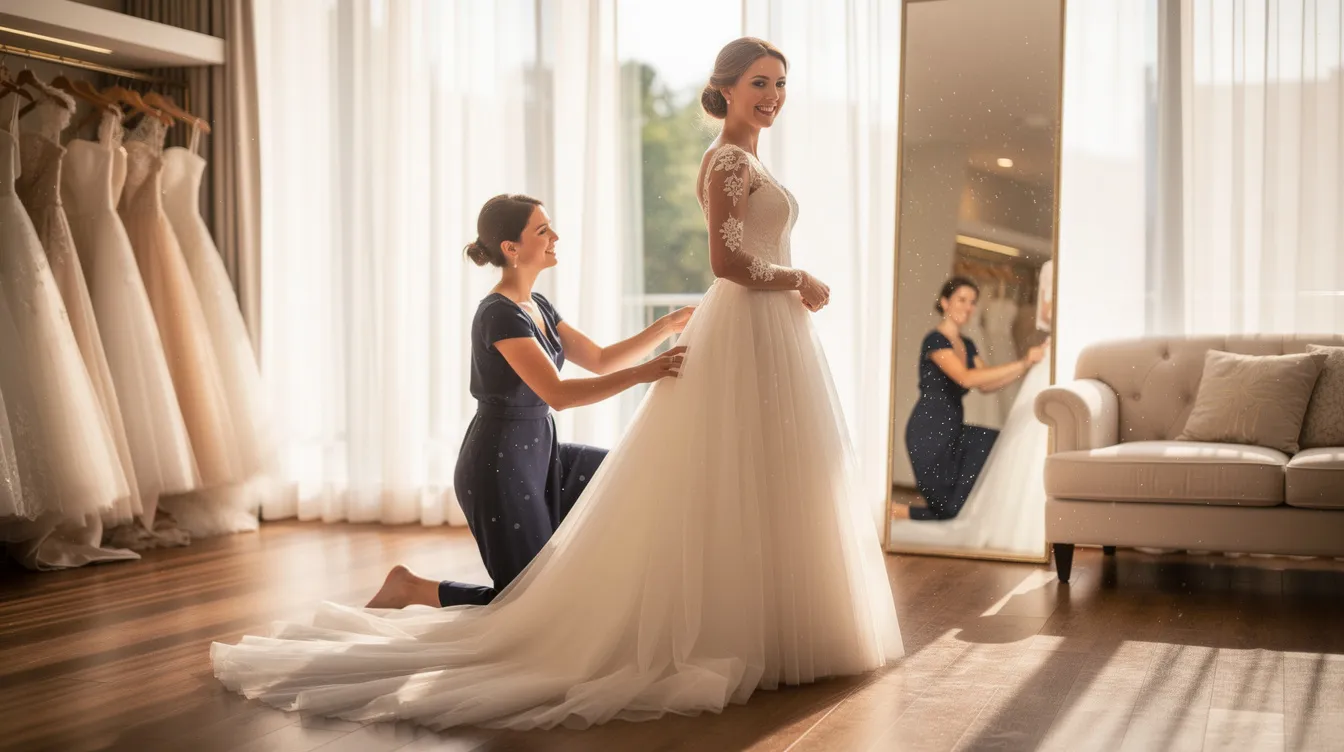
Finding the perfect wedding dress is one of the most exciting parts of wedding planning but knowing when to book that first bridal appointment can feel like a puzzle. Between production lead times, alteration schedules, and salon availability, timing matters more than most brides realize. This guide breaks down exactly when to book, which days and times work best, and how to make every minute of your appointment count.

How Far in Advance to Book Your Wedding Dress Appointment
So you just got engaged - congrats! Now comes the big question: when should you actually start dress shopping? Let's walk through the timeline.
If you're planning a 2027 wedding, start researching bridal salons about 12–14 months out. That means browsing designer collections, reading reviews from other brides, checking price ranges, and narrowing down which salons match your style and budget. Once you've done your homework, schedule your first bridal appointment 10–12 months before the wedding day. You should book your wedding dress appointments about 9-12 months before the wedding to stay on track.
Here's why that timeline works: most gowns take four to six months to arrive once you place an order. That's for standard made-to-order production. Custom or couture gowns especially those with heavy beading, intricate lace, or plus-size specifications can stretch to 9–12 months or more. After arrival, you'll need 8–12 weeks for alterations across two to three fittings.
Peak seasons make early booking even more important. Engagement season runs roughly November through February, which triggers a flood of brides scheduling their first appointments. Meanwhile, wedding season (May through October) means production backlogs at many designers. If your wedding date falls during peak months, add a few extra weeks of cushion to your timeline.
Your venue and location also influence when to start. Destination weddings or beach ceremonies often favor lighter gowns with simpler fabrics, which can streamline the alteration process. Indoor or formal weddings may call for structured silhouettes, heavier fabrics, and longer trains. All of these factors add complexity and time.
Planning a courthouse or elopement wedding within three to four months? It's absolutely doable. You'll want to schedule appointments at least 4–5 months before the wedding date if possible, focusing on off-the-rack options and simpler styles. More on that in the last-minute bride section below.
Best Days of the Week for a Bridal Appointment
Not all appointment days are created equal. The day you choose can dramatically shape your experience.
Saturdays are the busiest day in the bridal industry. Most stores see their Saturday calendars fill up four to six weeks in advance, and at popular salons, that window can be even tighter. If you have family members flying in or a larger group that can only gather on weekends, Saturday is your best bet - just book early.
Weekday appointments (Monday through Thursday) are a different world. The salon is quieter, your bridal consultant has more time to focus on you, and there's less competition for mirrors, stages, and fitting rooms. If you can swing a weekday, it's ideal for a first visit where you're still exploring your personal taste and don't want too many distractions.
Fridays hit a sweet spot. You get a bit of weekend energy without the full Saturday rush. Many professionals find Friday afternoons work well since they can leave work a little early and still have a relaxed, unhurried session. Think of it as the happy medium - especially if you're bringing one or two friends rather than a big entourage.
Best Times of Day to Shop for Your Wedding Dress
Beyond the day, the time slot you pick matters too. Here's how different windows tend to feel.
Morning appointments (10 a.m.–noon) are typically the calmest. Your stylist is fresh, the store is quiet, and natural light tends to be at its best - which makes a real difference when you're evaluating fabrics, beading, and color undertones. If you're a person who makes better decisions early in the day, this is your window.
Afternoon slots (noon–3 p.m.) bring more energy. You might see other brides shopping alongside you, which can add a fun, buzzy atmosphere. Some brides love that "say yes to the dress today" vibe. Just know that slight delays can happen if the shop is busy.
Evening appointments (after 4 p.m.) are convenient for working brides, but they come with trade-offs. Some salons only offer evening slots on certain weekdays, and sessions may be slightly shorter. Lighting can shift too, which affects how you see certain details on the gown. That said, if evenings are your only option, they still work. You just need to confirm the salon's hours and how much time you'll have.
Choose your time based on your energy level, your guests' schedules, and whether this is a first visit or a follow-up fitting. A morning slot is great for exploration; an afternoon or evening session might be perfect for a return visit where you already know what you want.
How Your Wedding Date Affects Your Dress Shopping Timeline
Your wedding date isn't just a circle on the calendar, it's the anchor for your entire dress shopping timeline.
Made-to-order wedding gowns usually require four to six months from order to arrival, with the exact window depending on the designer, season, and complexity of the dress. Wedding dress alterations typically cost between $700 and $1,000 and generally need 8–12 weeks spanning two to three fittings. Your first fitting usually happens about 8–10 weeks before the big day, with the final fitting roughly two weeks prior.
Let's make this concrete. If your wedding is June 20, 2027, you'd want your gown ordered by November 2026 at the latest. That means your first shopping appointment should happen around August or September 2026, giving you time to visit multiple appointments, compare styles, and make a confident decision.
Rush deliveries may incur additional costs for wedding dresses, and even then, your choices narrow significantly. If your wedding is less than five to six months away, you're looking at sample gowns, off-the-rack options, or pre-owned dresses which can still be beautiful but offer less flexibility on style, size, and customization.
And here's something many brides don't think about: timelines also affect your ability to change your mind. If you find yourself falling out of love with your wedding dress, having extra time in your schedule gives you real options. Without that cushion, you may feel stuck.

When to Book if You're a Last-Minute or Short-Engagement Bride
First things first: if your engagement is short, don't panic. Plenty of brides have found their dream dress on a tight timeline - you just need a different strategy.
A "last-minute" timeline typically means planning a wedding in three to six months or less. The moment you set your wedding date, book your bridal appointment. Don't wait for the venue contract or the color palette 'coz dress shopping is one area where every week matters.
Prioritize off-the-rack gowns, sample sales, and simpler silhouettes. A-line and sheath styles, for example, tend to require fewer alterations than heavily structured ball gowns. The additional cost of rush production fees can add hundreds to your total cost, so buying something that's already in the shop can save both time and money.
Be upfront with your bridal consultant about your timeline constraints. When consultants work with clear expectations, they can pull appropriate options immediately rather than spending time on gowns that won't arrive in time. That open communication is what turns a stressful situation into a manageable one.
Coordinating Your Bridal Appointment With Other Wedding Plans
Your dress appointment doesn't exist in a vacuum. It fits into a larger planning puzzle.
Step one: secure your venue and wedding date first. Your venue dictates formality, season, and setting, all of which influence your gown style. A garden ceremony calls for different fabrics than a cathedral wedding.
Step two: book your first wedding dress appointment shortly after. Knowing even basic details from your color palette, the season, and even up to the general vibe helps your bridal stylist narrow down silhouettes, designer options, and fabrics before you even walk through the door.
Step three: schedule bridesmaid and mother-of-the-bride appointments about 3–4 months after you say yes to your gown. This way, the bridal party's attire complements your dress rather than competing with it.
Step four: coordinate tux or suit appointments and accessory styling once your dress style and train length are finalized. Everything flows from the bride's look outward.
How Far Ahead to Book Different Types of Bridal Appointments
Not every appointment needs the same lead time. Here's a quick breakdown.
For your first-time bridal appointment, aim to book four to eight weeks in advance for weekday slots, and six to ten weeks out if you want a popular Saturday. The more sought-after the salon, the further ahead you'll need to plan.
Follow-up appointments. To re-try a favorite dress or bring your mother for a second look are usually easier to schedule on shorter notice, often one to three weeks out depending on the salon's calendar.
Accessory styling sessions and veil appointments typically happen once your gown has arrived at the store. Most custom gowns require two to three fittings, and you can usually schedule those as a package. Book your first alteration fitting as soon as the dress arrives, then work backward from the wedding day to space out the remaining visits.
How Long a Wedding Dress Appointment Usually Takes
You might be wondering: how much time do I actually need? Bridal stylists often spend 90 minutes with each bride during appointments. Appointments typically last 1.5 hours and include a consultation.
Here's how that time usually breaks down:
-
First 10–15 minutes: Consultation with your consultant: discussing your wedding date, venue, budget, must-haves, and style preferences.
-
Middle 40–60 minutes: The main event. Trying on four to six gowns, moving around in each, checking bodice fit, hemlines, and overall silhouette. Your consultant will guide brides through dress fittings and alterations logistics during this phase too.
-
Final 10–15 minutes: Narrowing down favorites, discussing next steps, and, if you've found the one, taking measurements and placing your order.
Some salons offer extended or VIP sessions (90 minutes to two hours) if you have many style ideas, a larger entourage, or want to try gowns from multiple designers. Arrive a few minutes early so you can fill out any paperwork and settle in without eating into your try-on time.
Choosing the Right Salon, Bridal Consultant, and Time Slot
Where you shop and who helps you shapes the entire experience.
Start by researching bridal salons' designer rosters, price ranges, and overall vibe. Google reviews and feedback from other brides are goldmines for understanding what a salon is really like. Communicate your wedding date, budget, and theme to your stylist before you arrive so they can prepare.
Bridal consultants help brides find their ideal wedding attire by recommending dress options based on body type and taste. They also provide emotional support during the shopping process. Trust me, that matters more than you'd expect. A great consultant won't just hand you dresses; they'll listen, guide, and offer expert advice tailored to your vision.
If a friend had exceptional service with a specific consultant and left a positive review naming them, request that person when you book. Popular consultants on Saturday or evening slots fill up fast, so plan ahead. Also confirm salon policies around guest count, photos, children, and food or drink so there are no surprises on appointment day.
What to Ask When You Book Your Wedding Dress Appointment
A quick phone call or online inquiry can save you headaches later. Here are the essentials.
Ask about cancellation policies. Some salons require a credit card hold or charge a fee for missed appointments, so ask whether you need to pay a booking fee, deposit, or no-show charge before the appointment is confirmed. Knowing this upfront helps you avoid any feel bad moments if your schedule shifts.
Confirm your guest count. Ask how many people you can bring to your appointment. Most bridal salons allow two to four guests for initial visits, with flexibility for later appointments.
Discuss designers and availability. Ask which designers, sizes, and price points are most available within the time frame before your wedding date. Inquire about the expected turnaround time for your dress if you order that day.
Ask about customization. Ask if the dress can be customized before purchasing: neckline changes, sleeve additions, or fabric swaps vary depending on the designer and timeline.
Check for special options. Some shops offer premium VIP appointments with extra time, a private showroom, or champagne. If that appeals to you, it's worth asking and it's often available during off-peak weekday slots.
How Many Guests to Bring and When to Book Group-Friendly Times
Your entourage can make or break the experience. Limit your group to 2–3 trusted friends or family members who understand your style and will offer honest, constructive feedback. Bring a small, supportive group of guests who lift you up rather than add confusion.
Larger groups are easiest to host on Saturdays or Sunday afternoons when most stores have more staff available to manage the energy in the showroom. But here's a tip: consider a smaller weekday appointment for your initial try-ons, then invite more guests to a later "reveal" appointment once you've narrowed things down.
Coordinating with out-of-town moms and bridesmaids? Book dates well in advance of holidays and long weekends when travel gets complicated. A Thursday or Friday visit can work beautifully if everyone's already in town for a weekend event.

What to Wear and Bring to a Timed Bridal Appointment
A little preparation goes a long way when you're working within a 60–90 minute window.
Wear nude or neutral-colored, seamless underwear to fittings. It won't show through fabrics and gives the cleanest look in photos. Many wedding dresses include built-in supports reducing the need for bras, but bring a strapless or convertible bra just in case. Wear easy-to-remove clothing for quick changes; think a button-down top or stretchy dress rather than a complicated outfit.
Bring visuals of styles you like to help the stylist curate selections. Screenshots from Instagram, Pinterest boards, or saved looks from your favorite bridal boutique's social channels all work. Trying on accessories such as veils helps visualize the complete look, so if you have an heirloom piece you know you want to incorporate, bring it along.
Bring shoes that match the height you plan to wear on your wedding day. Even a basic pair of heels at the right height helps your consultant pin hems accurately and gives you a realistic sense of proportion. Wear your hair loosely styled and apply light makeup similar to how you might look on the wedding day just because it makes a surprising difference in how you see yourself in each gown.
Managing Expectations Around Tipping Your Bridal Consultant
Tipping culture around bridal appointments can feel murky, so let's clear it up—many brides even wonder, “should I tip my bridal consultant?”
Tipping bridal consultants is not mandatory but appreciated. Whether you tip your bridal consultant depends on local customs, store policies, and your personal budget. Some bridal shops have specific policies regarding tipping: a few don't allow it at all, while others have a tip option built into checkout. Whether you tip can also vary based on the service provided and the salon's policy.
Tips for bridal consultants typically range from 5% to 20% of the dress cost. So for a $2,000 dress, a tip between $200 and $400 would be customary if you choose to offer one. Many consultants are already compensated through wages or commissions, so tips are discretionary rather than something they automatically expect, but they're always a welcome gesture of appreciation when someone provides exceptional service.
If tipping doesn't fit your budget, there are other meaningful ways to show gratitude. Leaving a positive review naming your consultant, writing a thoughtful note, or sharing wedding day photos with them after the big day are all deeply appreciated. Don't feel bad if a monetary tip isn't in the cards. Gratitude in any form goes a long way. You can always ask discreetly about the salon's policy if you're unsure whether to tip your bridal consultant.
Many consultants work on an hourly wage plus commission structure, so a kind word, referral, or review can genuinely impact their career as an added bonus.
Booking for Trunk Shows, Sample Sales, and Special Events
Beyond standard appointments, special events can be game-changers for your dress shopping experience.
Trunk shows allow trying on an entire designer collection and not just the handful of samples a salon normally carries. These events typically run for a weekend and give you access to styles, sizes, and detail options you wouldn't otherwise see in the shop. They fill up quickly, so join the salon's email list or follow them on social media to book four to six weeks in advance.
Sample sales are ideal for short-timeline or budget-conscious brides. Gowns are sold as-is at significant discounts, but sizes are limited and alterations may be more extensive. Come ready to decide. These events move fast, and hesitation can mean missing your perfect gown.
Keep in mind that special events may have slightly shorter time slots or different guest rules than a standard appointment, so confirm those details when you book.
Weekend vs. Weekday: Pros and Cons for Different Bride Personalities
Your ideal appointment day has as much to do with your personality as your calendar.
If you're the kind of person who feeds off energy and excitement, a Saturday appointment might be perfect. You'll see other brides trying on gowns, hear champagne corks popping, and feel the collective buzz of everyone searching for their perfect dress. It's the classic bridal experience, and for extroverted brides, it's electric.
On the flip side, if you're easily overwhelmed or prefer making big decisions in a calm environment, a Monday through Thursday appointment is your friend. Fewer distractions, more one-on-one time with your consultant, and the freedom to take your time without feeling like someone's waiting for your fitting room.
Then there's the Friday crowd. Working brides who can duck out a bit early, moms who are free once kids are at school, or friends who want a fun start to the weekend. A late Friday afternoon slot combines convenience with a hint of weekend celebration. Choose the day that matches your stress level and decision-making style, not just what your friends suggest.
Common Booking Mistakes to Avoid
Even the most organized brides can stumble. Here are pitfalls to watch for.
-
Waiting until 4–5 months out to start shopping. Especially during busy seasons, this leaves almost no margin for production and alterations. It's acceptable to take time to decide on a wedding dress, but you need enough runway to execute once you do.
-
Over-scheduling multiple salons in one day. Two salons max. Beyond that, decision fatigue sets in, dresses blur together, and you lose the ability to stay calm and think clearly. Spread visits across weekends.
-
Bringing a big Saturday entourage before narrowing your interests. Too many opinions too early can drown out your own voice. Save the large group for a reveal appointment after you've identified top contenders.
-
Booking too early without a date or venue. If your vision isn't at least loosely formed, you risk falling in love with a gown that doesn't match the final idea of your wedding. Have the basics locked before you commit to a dress.
Day-Of-Appointment Tips to Make the Most of Your Time
You've booked the slot, now make it count.
Eat a light meal and hydrate before you arrive. Dress shopping is more physically demanding than it sounds, and low energy leads to poor decisions. Arrive 10–15 minutes early to fill out any intake forms, meet your stylist, and review your budget and must-haves without cutting into try-on time.
Vocalize preferences to help the consultant narrow down choices. Be honest about what you love and what you don't. Your consultant can't read your mind, but they can work wonders when you communicate openly. Try on a variety of dresses to determine what flatters you, even styles you wouldn't normally consider. You might be surprised.
Take photos during appointments for later comparison, and short videos if the salon allows it. These are invaluable for sharing with family members or friends who couldn't attend, and for comparing favorites when you're deciding between your top two or three.
Why Booking With Alexandra's Boutique Makes Timing Easier
At Alexandra's Boutique, the goal is simple: make your wedding dress shopping experience feel exciting, not stressful.
With a wide range of designers and sizes available, even brides on tighter timelines can find a gown that feels like it was made for them. Experienced bridal stylists map out a custom shopping and fitting schedule based on each bride's wedding date and specific needs: whether you're 14 months out or working with a shorter engagement.
If you're still exploring what style speaks to you, take some time to browse Alexandra's blog and gown collections. For instance, understanding the art of the wedding dress train can help you plan your appointment around train styles and the alteration detail they require.
Ready to find your perfect wedding dress? Book a well-timed appointment that fits your schedule, your planning stage, and your vision and let the experience be everything you've been dreaming about.


