


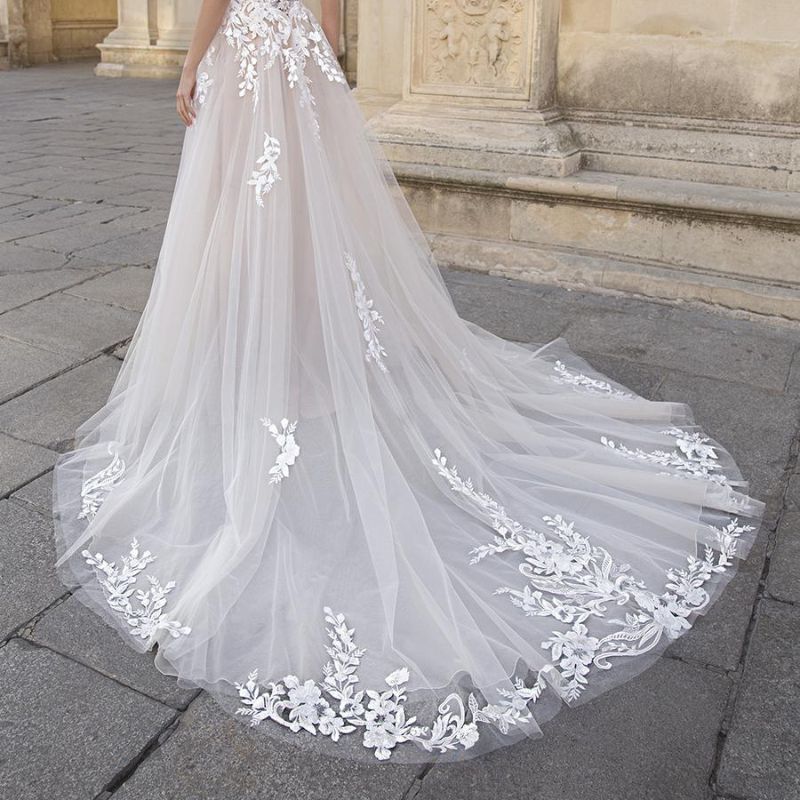
Among all the parts of a wedding dress, the train is one of the most important. It is the extended fabric that flows behind your dress, starting from your waist, hips, or shoulders. This fabric creates that dramatic, sometimes almost ethereal look you see in wedding photos and movies. It’s also one of the easiest ways to distinguish a regular long white dress from an authentic wedding gown.
Trains come in different lengths and styles, each offering a unique look. Some barely touch the floor, while others stretch out for yards behind you. The train you choose sets the tone for your entire bridal look, and we’re here to help you pick the right one. Read on to learn about the art of the wedding dress train and what you need to know to make a good choice for your venue, style, budget, and comfort.
The Different Train Lengths
The most defining characteristic of every train style is its length. Let’s explore how it varies among the sweep, court, chapel, cathedral, and monarch styles.
Sweep Train
This is your subtlest, most understated option. A sweep train barely brushes the floor. We’re talking about 6 inches or less extending beyond your hem.
Brides who choose sweep trains usually want easy movement throughout their reception, and this style delivers exactly that. It won’t get caught underfoot, and it usually doesn’t need to be secured with a bustle when you dance (more on bustles later).
Court Train
Adding a bit more drama, a court train extends about a foot behind your dress. This length is also very easy to walk in, but it gives a bit more of that bridal length.
Chapel Train
Now we’re getting into serious princess territory. Chapel trains extend 3 to 4 feet behind your dress, creating that classic bridal silhouette you’ve probably seen in countless wedding magazines. This length works beautifully for most venues, strikes a perfect balance between drama and practicality, photographs absolutely stunningly, and gives you that wow factor without going overboard.
Cathedral Train
Ready to go full fairy tale? Cathedral trains stretch 6 to 8 feet behind you. These trains make a statement—there’s no question about it. Brides who choose cathedral trains usually have formal ceremonies in large venues, want maximum drama in their photos, love the idea of a truly grand entrance, and don’t mind having attendants help manage the fabric.
Royal or Monarch Train
This is the ultimate in bridal drama. Royal trains extend more than 8 feet—sometimes much more. Princess Diana’s 25-foot train is one such example, though an extreme one. If you choose this option, you’ll need a large ceremony space, multiple people to help you maneuver, and a serious commitment to the drama. But if you’ve always dreamed of that over-the-top moment, this delivers.
Detachable Trains
Some brides choose detachable trains that offer ceremony drama without reception restrictions. These trains attach at your waist or shoulders, remove completely for dancing, and cost less than full-length integrated trains.

Your Train Should Match Your Venue
Your venue—specifically whether it’s indoors or outdoors—should heavily influence your train choice.
Indoor Venues
Indoor venues let you wear pretty much any train length you want since you can go longer without worrying about dirt, grass stains, or catching on rough surfaces. Smooth, clean floors give you a lot more flexibility.
That said, some indoor venues (like historic buildings) have winding stairs, narrow doorways, uneven floors, and lots of furniture that can make longer trains challenging to wear.
Outdoor Venues
If your venue is outdoors, you might want to stick to a train that is chapel length or shorter, and in any case, you’ll have to accept that your dress will probably get dirty. Going shorter is simply practical because it makes your gown less likely to catch on foliage, gravel, rough pavement, and so forth.
Other Practical Considerations
Venue isn’t the only train-affecting factor. You should also consider your budget, comfort needs, and event season (even for indoor venues).
Budget
Longer trains use more fabric, which means higher costs. That extra yardage also requires more alterations, more intricate bustling, additional pressing and steaming, and potentially more preservation costs after your wedding.
Comfort
On your wedding day, you need to walk confidently, climb stairs safely, greet guests comfortably, and dance freely. Though a bustle will help you do all these things, long trains are still more difficult to pin up and weigh more. If you value comfort above all else, then shorter might be better.
Season
If you get married outdoors, then you have to account for your train dragging on the ground. Depending on where you live, some seasons will be muddier and more debris-littered than others, and this might impact how much of your dress you want touching the earth.
Even for indoor weddings, you’ll probably need to step outside, whether to enter the venue or as you leave it, so season should always be a factor.
The All-Important Bustle
Wedding gowns aren’t meant to be practical; they’re meant to be beautiful. But today’s modern bride is usually tearing it up on the dance floor after the ceremony, so what’s she to do with all that trailing fabric behind her?
Whether you go with a court or royal train, you’ll probably want to pull it off the ground and out of the way of your dancing feet after the ceremony. A bustle makes that possible.
A bustle typically gathers up your train and secures it to a higher part of your gown, creating a shorter silhouette. However, there are many different types of bustles, including these:
- American bustle (over-bustle)
- French bustle (under-bustle)
- ballroom bustle
- Austrian bustle
- Victorian bustle
- bow bustle
- royal bustle
- Watteau train bustle
- wrist loop
Wedding gowns don’t come with bustles, so your seamstress will build this into your gown.

Final Thoughts From Alexandra’s Boutique
Now that you know more about the art of the wedding dress train, you can more confidently choose a length that balances your vision with practical reality. If you want some more help deciding, then ask to try on a variety of train styles at your bridal boutique appointment. This will give you the best idea of how comfortable you feel in different styles and what makes you feel the most bridal. Then from there, consider how your budget, venue, season, and bustle needs will factor in. When you find the right train, you’ll know—and you’ll walk down that aisle with absolute confidence.
And for the ultimate dress shopping experience and expert style advice, visit Alexandra’s Boutique. We sell bridal wedding dresses in Massachusetts, and we would love to help you find the perfect gown in the perfect length for your big day.


